DRONE COMMAND ONE
The Orchestration Layer For Autonomous Operations.
The Intelligence Behind the Mission
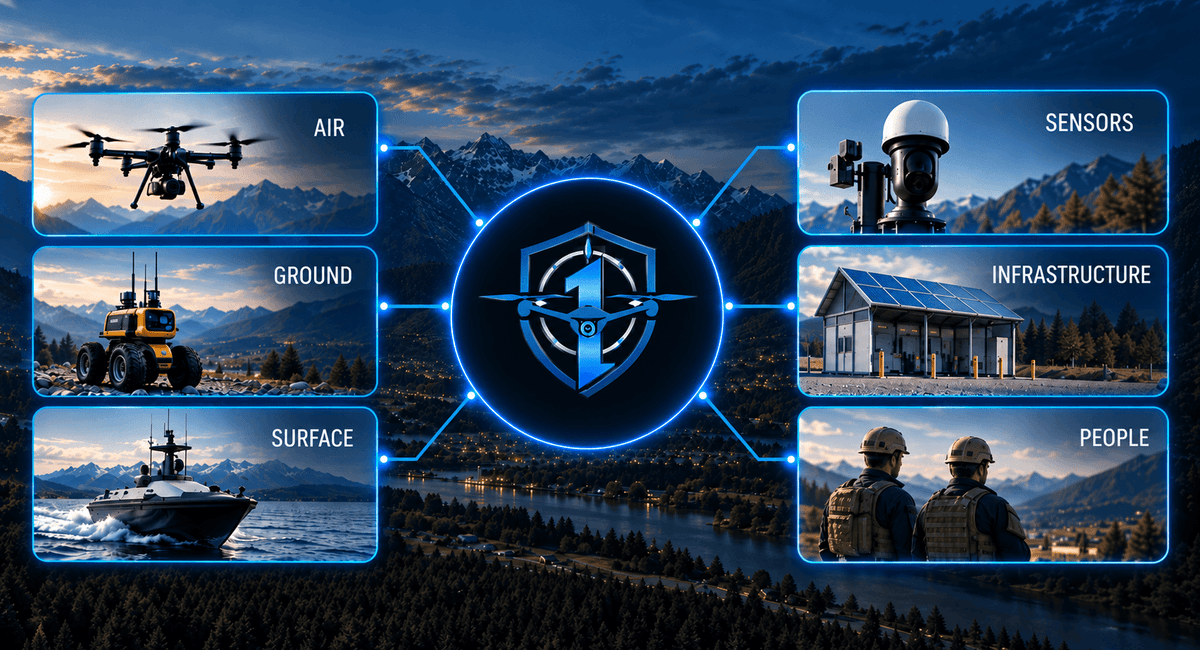
The Drone Command One (DC1) Orchestration Layer connects people, drones, sensors, workflows, and operational data into a coordinated command-and-control environment.
DC1 goes beyond simply flying drones. When an event is detected, DC1 can initiate a predefined workflow to analyze the situation, generate alerts, dispatch personnel or autonomous assets, provide response instructions, track actions, escalate when necessary, and document the entire event.
Think of DC1 as the conductor of the operation. Drones, cameras, sensors, security personnel, emergency responders, and other systems are individual instruments. The DC1 Orchestration Layer coordinates those resources, so they work together as one operational system.Detect → Analyze → Decide → Respond → Verify → Document
This means faster response, consistent execution of operating procedures, better situational awareness, reduced workload, improved accountability, and the ability to integrate autonomous systems into existing human operations.
DC1 doesn't just manage drones. It orchestrates the mission.
C O R E C A P A B I L I T I E S
From Mission Planning to After-Action Reporting.

Mission Planning
Routes, waypoints, patrol schedules, objectives and operational rules.

Mission Execution
Launch, redirect, pause and manage autonomous missions from a common interface.

Asset Management
Track vehicles, docks, batteries, payloads and availability.

Sensor Fusion
Bring camera, thermal, radar, alarm and IoT information into the mission context.

Incident Workflows
Connect detection events to playbooks, assets, personnel and reporting.

Human-in-the-Loop
Support operator approval, intervention and mission control where required.
O P E R A T I O N A L M O D E L
One Common Operating Picture.
The platform is designed to sit above individual equipment ecosystems and create a mission-centric view of what is happening, what is available and what should happen next.

STEP 1
Event
Alarm, dispatch, schedule, sensor or operator request.

STEP 2
Mission
Create or select the appropriate operational workflow.

STEP 3
Assets
Assign autonomous and human resources.

STEP 4
Response
Coordinate execution and shared awareness.

STEP 5
Record
Capture outcomes, media, timing and decisions.