• FIRE • EMS • EMERGENCY MANAGEMENT

    Assess the Emergency Before Sending People Into it.

    Fire, Rescue & Emergency Management

    Drone Command One (DC1) helps fire departments, rescue organizations, emergency management agencies, and other first responders coordinate personnel, drones, sensors, and operational workflows through a single command-and-control environment.

    During a major emergency, the challenge is rarely a lack of information. The challenge is getting the right information to the right people at the right time—and coordinating what happens next.

    That is the role of the DC1 orchestration layer.

    DC1 can connect incident commanders, firefighters, rescue personnel, emergency management teams, drones, cameras, thermal imaging, environmental sensors, and other resources into a coordinated operational environment.

    Fire & Emergency Response

    When an emergency occurs, DC1 can initiate predefined response workflows based on the type and severity of the incident.

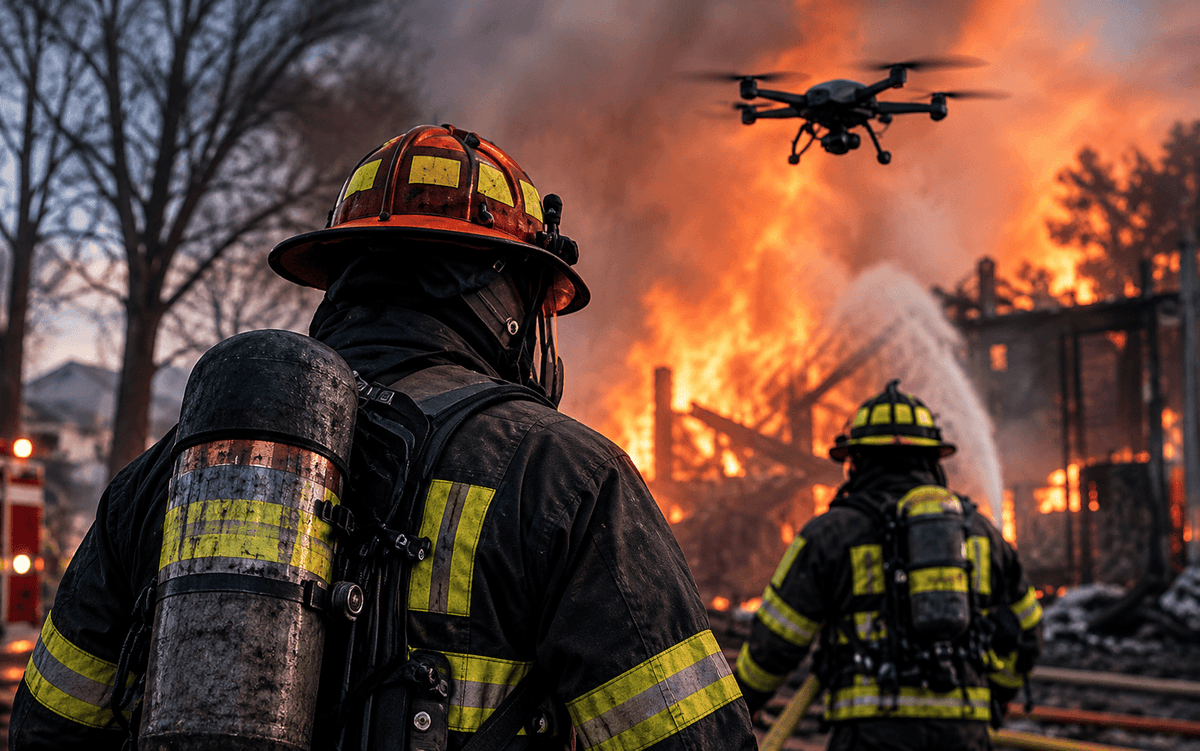
    For example, following a reported structure fire, DC1 could alert designated personnel, dispatch an available drone, provide response instructions, establish assignments, and begin collecting information before the first units arrive.

    A drone equipped with visible and thermal cameras can provide an aerial view of the structure, identify areas of elevated heat, monitor fire progression, and help incident commanders evaluate surrounding exposures.

    The objective is to give responders better situational awareness before sending personnel into a potentially dangerous environment.

    Search & Rescue

    During a search-and-rescue operation, DC1 can coordinate drones and ground teams across a defined search area.

    Rather than relying entirely on personnel to search difficult terrain, drones equipped with visual or thermal cameras augmented with AI capabilities can examine large areas from the air. Potential targets can be identified and their locations communicated to ground teams for investigation.

    Multiple drones could eventually divide a larger search area into sectors, while DC1 maintains the overall mission, assignments, status, and response workflow.

    Hazardous Situations

    Some environments should be examined remotely before responders enter.

    DC1 can support drones equipped with specialized sensors for missions involving hazardous materials, gas leaks, industrial accidents, fires, chemical releases, flooding, damaged structures, or other potentially dangerous conditions.

    Instead of immediately placing personnel in an unknown environment, responders can first send technology.

    Assess the situation. Understand the hazard. Then send people where they are needed.
    Disaster Response

    Following a tornado, flood, severe storm, explosion, earthquake, or other large-scale emergency, obtaining an accurate picture of the affected area can take valuable time.

    DC1 can coordinate autonomous or remotely supervised drone missions to survey affected areas, document damage, identify blocked roads, locate damaged infrastructure, search for people requiring assistance, and provide imagery to emergency management personnel.

    As additional information becomes available, DC1 workflows can generate assignments and direct appropriate teams to specific locations.

    Multi-Agency Coordination

    Major emergencies frequently involve more than one organization.

    Fire departments, police, EMS, emergency management, public works, utilities, hospitals, state agencies, and other organizations may all participate in the same response.

    DC1's orchestration layer is designed around this type of coordinated operation.

    Instead of treating the drone as a standalone piece of equipment, DC1 can make it another operational resource within the response—working alongside people, sensors, communications, and established procedures.

    An event detected by one system can generate an alert, initiate a workflow, assign personnel, dispatch an authorized drone or other resource, escalate the incident, and provide updated information to decision-makers.

    AI-Assisted Situational Awareness

    DC1 can use AI-assisted analysis of available camera and sensor information to help identify conditions requiring attention.

    Depending on the mission and available sensors, this could include identifying people or vehicles, locating potential hazards, detecting abnormal heat, recognizing changes in an area, or identifying other predefined conditions.

    One Operational Picture

    The real strength of DC1 is its ability to bring the pieces together.

    Personnel know their assignments. Incident commanders receive information from the field. Drones provide another perspective. Sensors provide additional data. Workflows establish what should happen next.

    DC1 becomes the orchestration layer connecting those resources.

    Instead of managing people, drones, sensors, and procedures as separate systems, DC1 helps coordinate them as part of one response.

    Protecting the People Who Protect Us

    Every emergency contains uncertainty. Sending firefighters, rescue personnel, or emergency responders into an unknown environment creates risk.

    DC1 provides another option:

    Send the drone first.

    Let technology examine the situation, provide imagery and sensor information, identify potential hazards, and give incident commanders a clearer understanding of what their personnel may encounter.

  • FIRE • EMS • EMERGENCY MANAGEMENT

    Assess the Emergency Before Sending People Into it.

    Fire, Rescue & Emergency Management

    Drone Command One (DC1) helps fire departments, rescue organizations, emergency management agencies, and other first responders coordinate personnel, drones, sensors, and operational workflows through a single command-and-control environment.

    During a major emergency, the challenge is rarely a lack of information. The challenge is getting the right information to the right people at the right time—and coordinating what happens next.

    That is the role of the DC1 orchestration layer.

    DC1 can connect incident commanders, firefighters, rescue personnel, emergency management teams, drones, cameras, thermal imaging, environmental sensors, and other resources into a coordinated operational environment.

    Fire & Emergency Response

    When an emergency occurs, DC1 can initiate predefined response workflows based on the type and severity of the incident.

    For example, following a reported structure fire, DC1 could alert designated personnel, dispatch an available drone, provide response instructions, establish assignments, and begin collecting information before the first units arrive.

    A drone equipped with visible and thermal cameras can provide an aerial view of the structure, identify areas of elevated heat, monitor fire progression, and help incident commanders evaluate surrounding exposures.

    The objective is to give responders better situational awareness before sending personnel into a potentially dangerous environment.

    Search & Rescue

    During a search-and-rescue operation, DC1 can coordinate drones and ground teams across a defined search area.

    Rather than relying entirely on personnel to search difficult terrain, drones equipped with visual or thermal cameras augmented with AI capabilities can examine large areas from the air. Potential targets can be identified and their locations communicated to ground teams for investigation.

    Multiple drones could eventually divide a larger search area into sectors, while DC1 maintains the overall mission, assignments, status, and response workflow.

    Hazardous Situations

    Some environments should be examined remotely before responders enter.

    DC1 can support drones equipped with specialized sensors for missions involving hazardous materials, gas leaks, industrial accidents, fires, chemical releases, flooding, damaged structures, or other potentially dangerous conditions.

    Instead of immediately placing personnel in an unknown environment, responders can first send technology.

    Assess the situation. Understand the hazard. Then send people where they are needed.

    Disaster Response

    Following a tornado, flood, severe storm, explosion, earthquake, or other large-scale emergency, obtaining an accurate picture of the affected area can take valuable time.

    DC1 can coordinate autonomous or remotely supervised drone missions to survey affected areas, document damage, identify blocked roads, locate damaged infrastructure, search for people requiring assistance, and provide imagery to emergency management personnel.

    As additional information becomes available, DC1 workflows can generate assignments and direct appropriate teams to specific locations.

    Multi-Agency Coordination

    Major emergencies frequently involve more than one organization.

    Fire departments, police, EMS, emergency management, public works, utilities, hospitals, state agencies, and other organizations may all participate in the same response.

    DC1's orchestration layer is designed around this type of coordinated operation.

    Instead of treating the drone as a standalone piece of equipment, DC1 can make it another operational resource within the response—working alongside people, sensors, communications, and established procedures.

    An event detected by one system can generate an alert, initiate a workflow, assign personnel, dispatch an authorized drone or other resource, escalate the incident, and provide updated information to decision-makers.

    AI-Assisted Situational Awareness

    DC1 can use AI-assisted analysis of available camera and sensor information to help identify conditions requiring attention.

    Depending on the mission and available sensors, this could include identifying people or vehicles, locating potential hazards, detecting abnormal heat, recognizing changes in an area, or identifying other predefined conditions.

    One Operational Picture

    The real strength of DC1 is its ability to bring the pieces together.

    Personnel know their assignments. Incident commanders receive information from the field. Drones provide another perspective. Sensors provide additional data. Workflows establish what should happen next.

    DC1 becomes the orchestration layer connecting those resources.

    Instead of managing people, drones, sensors, and procedures as separate systems, DC1 helps coordinate them as part of one response.

    Protecting the People Who Protect Us

    Every emergency contains uncertainty. Sending firefighters, rescue personnel, or emergency responders into an unknown environment creates risk.

    DC1 provides another option:

    Send the drone first.

    Let technology examine the situation, provide imagery and sensor information, identify potential hazards, and give incident commanders a clearer understanding of what their personnel may encounter.

  • Coordinate The Whole Response.

    Section image

    Autonomous Reconnaissance

    Dispatch air or ground assets to collect data before human entry.

    Section image

    Thermal & Video

    Combine live imagery with map context and incident information.

    Section image

    Mission History

    Retain actions, media and timelines for after-action review.
  • S A F E R R E C O N N A I S S A N C E

    Send Technology Into Danger First.

    Drone Command One can coordinate autonomous reconnaissance so responders receive thermal imagery, video and location intelligence before entering hazardous or unstable environments.

    ✓ Structure-Fire Assessment

    ✓ Hazmat Reconnaissance

    ✓ Flood & Disaster Assessment

    ✓ Thermal Imaging

    ✓ Search and Rescue

    ✓ Incident Command Support

    Fast situational awareness helps incident command place people and resources where they can have the greatest effect.

  • S A F E R R E C O N N A I S S A N C E

    Send Technology Into Danger First.

    Drone Command One can coordinate autonomous reconnaissance so responders receive thermal imagery, video and location intelligence before entering hazardous or unstable environments.

    ✓ Structure-Fire Assessment

    ✓ Hazmat Reconnaissance

    ✓ Flood & Disaster Assessment

    ✓ Thermal Imaging

    ✓ Search And Rescue

    ✓ Incident Command Support

    Fast situational awareness helps incident command place people and resources where they can have the greatest effect.