PUBLIC SAFETY
Intelligence On Scene Before Officers Arrive.
Law Enforcement & Public Safety Drone Command One (DC1) helps law enforcement agencies coordinate personnel, drones, sensors, and operational workflows through a single command-and-control environment.
DC1 is more than a drone management system. Its orchestration layer connects officers, dispatchers, supervisors, autonomous drones, cameras, sensors, and other systems so they can operate as part of a coordinated response.
Routine Patrol & Operations
DC1 can help departments schedule and manage routine patrol activities, assign officers or teams, document completed assignments, and provide supervisors with real-time operational visibility.
Drones can augment officers by performing scheduled aerial patrols of areas such as parks, public facilities, parking areas, critical infrastructure, event locations, and other designated areas. This can extend an agency's visibility without requiring an officer to physically patrol every location.
Emergency Response
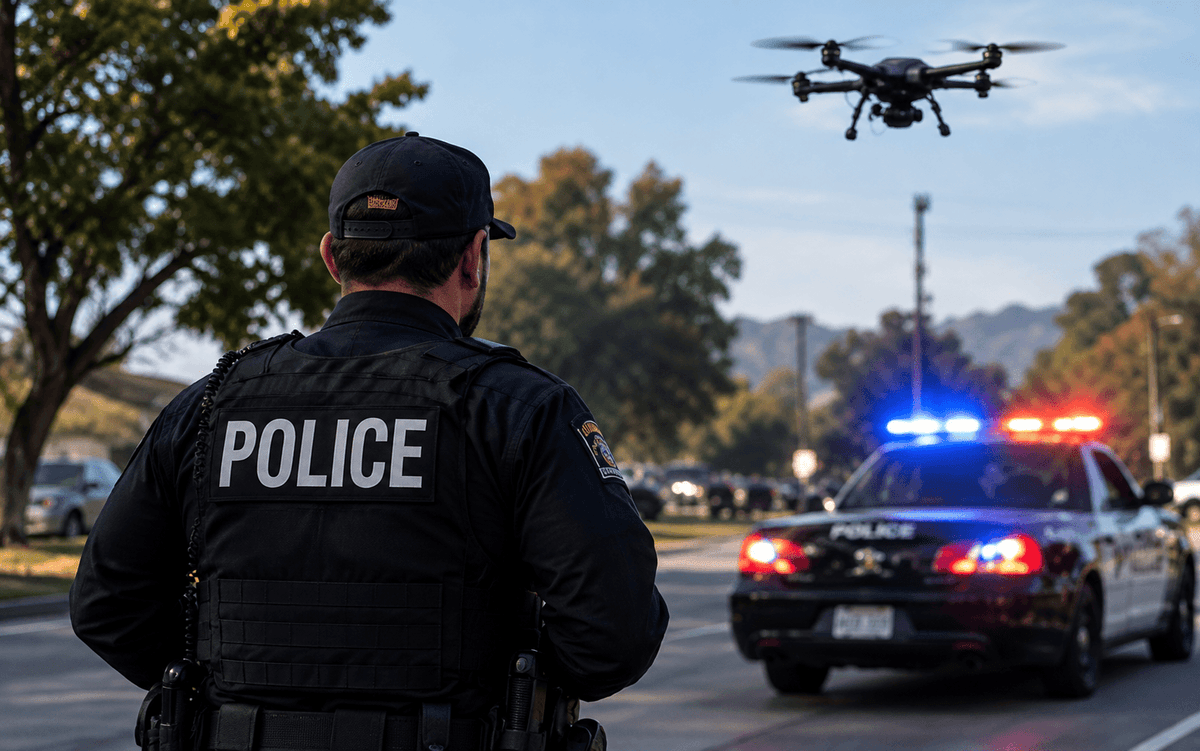
When an incident occurs, DC1 can initiate a predefined workflow based on the type of event.
For example, following an alarm or emergency call, DC1 could dispatch anavailable drone to the location while simultaneously notifying appropriate
personnel. The drone can provide live aerial video and other sensor
information, giving responding officers additional situational awareness before
they arrive.The objective is simple: help officers understand what they are approaching before they enter the situation.
Search, Tracking & Situational Awareness
Equipped with appropriate cameras and sensors, drones integrated with DC1 can assist with:
- Searching large areas for missing or endangered people
- Monitoring an active incident from a safer distance
- Providing an aerial view during vehicle or foot pursuits where legally and operationally appropriate
- Supporting accident and crime-scene documentation
- Monitoring large public events and emergency scenes
- Inspecting areas that may be dangerous or difficult for personnel to access
- Using thermal imaging to assist nighttime and low-visibility operations
Rather than providing another independent video feed that someone must constantly monitor, DC1 can incorporate drone information into the broader operational workflow
AI-Assisted Detection
DC1 can use AI-assisted analysis of camera and sensor information to identify conditions that may require attention and alert authorized personnel.
Depending upon the mission and agency policies, this could include detecting vehicles, people, objects, unusual activity, perimeter breaches, or other predefined conditions.
The system can then initiate the appropriate workflow—alerting personnel, assigning a task, dispatching another authorized asset, escalating the event, and maintaining a record of the response.
Multi-Drone Operations
For larger incidents, DC1 is designed to coordinate multiple drones and personnel as part of the same mission. One drone might maintain an overview of an incident while another examines a specific location. Additional drones or personnel can be assigned as circumstances change.
This is where the DC1 orchestration layer becomes particularly valuable: instead of operating each drone, sensor, and response team independently, DC1 brings them together into a coordinated operational environment.
Evidence & Accountability
DC1 can also help maintain an operational record of an incident, including mission assignments, alerts, acknowledgments, workflow actions, drone activity, imagery, and other available information.
This provides agencies with a documented timeline that can support incident review, reporting, training, and evidence-management procedures.
Keeping Officers Out of Harm's Way
Perhaps the greatest benefit of DC1 is not simply automation, it is the ability to put technology into a potentially dangerous situation before putting an officer there.
A drone can look around a building, inspect a rooftop, search a wooded area, observe an accident scene, examine a hazardous location, or provide an aerial perspective while officers remain at a safer distance.
DC1 brings those capabilities together with the people responsible for making decisions.
Drone Command One connects officers, drones, sensors, communications, and operational workflows into one coordinated environment—helping law enforcement agencies see sooner, respond faster, coordinate more effectively, and reduce unnecessary risk to personnel and the public.
PUBLIC SAFETY
Intelligence On Scene Before Officers Arrive.
Law Enforcement & Public Safety Drone Command One (DC1) helps law enforcement agencies coordinate personnel, drones, sensors, and operational workflows through a single command-and-control environment.
DC1 is more than a drone management system. Its orchestration layer connects officers, dispatchers, supervisors, autonomous drones, cameras, sensors, and other systems so they can operate as part of a coordinated response.
Routine Patrol & Operations
DC1 can help departments schedule and manage routine patrol activities, assign officers or teams, document completed assignments, and provide supervisors with real-time operational visibility.
Drones can augment officers by performing scheduled aerial patrols of areas such as parks, public facilities, parking areas, critical infrastructure, event locations, and other designated areas. This can extend an agency's visibility without requiring an officer to physically patrol every location.
Emergency Response
When an incident occurs, DC1 can initiate a predefined workflow based on the type of event.
For example, following an alarm or emergency call, DC1 could dispatch anavailable drone to the location while simultaneously notifying appropriate personnel. The drone can provide live aerial video and other sensor information, giving responding officers additional situational awareness before
they arrive.The objective is simple: help officers understand what they are approaching before they enter the situation.
Search, Tracking & Situational Awareness
Equipped with appropriate cameras and sensors, drones integrated with DC1 can assist with:
- Searching large areas for missing or endangered people
- Monitoring an active incident from a safer distance
- Providing an aerial view during vehicle or foot pursuits where legally and operationally appropriate
- Supporting accident and crime-scene documentation
- Monitoring large public events and emergency scenes
- Inspecting areas that may be dangerous or difficult for personnel to access
- Using thermal imaging to assist nighttime and low-visibility operations
Rather than providing another independent video feed that someone must constantly monitor, DC1 can incorporate drone information into the broader operational workflow
AI-Assisted Detection
DC1 can use AI-assisted analysis of camera and sensor information to identify conditions that may require attention and alert authorized personnel.
Depending upon the mission and agency policies, this could include detecting vehicles, people, objects, unusual activity, perimeter breaches, or other predefined conditions.
The system can then initiate the appropriate workflow—alerting personnel, assigning a task, dispatching another authorized asset, escalating the event, and maintaining a record of the response.
Multi-Drone Operations
For larger incidents, DC1 is designed to coordinate multiple drones and personnel as part of the same mission. One drone might maintain an overview of an incident while another examines a specific location. Additional drones or personnel can be assigned as circumstances change.
This is where the DC1 orchestration layer becomes particularly valuable: instead of operating each drone, sensor, and response team independently, DC1 brings them together into a coordinated operational environment.
Evidence & Accountability
DC1 can also help maintain an operational record of an incident, including mission assignments, alerts, acknowledgments, workflow actions, drone activity, imagery, and other available information.
This provides agencies with a documented timeline that can support incident review, reporting, training, and evidence-management procedures.
Keeping Officers Out of Harm's Way
Perhaps the greatest benefit of DC1 is not simply automation, it is the ability to put technology into a potentially dangerous situation before putting an officer there.
A drone can look around a building, inspect a rooftop, search a wooded area, observe an accident scene, examine a hazardous location, or provide an aerial perspective while officers remain at a safer distance.
DC1 brings those capabilities together with the people responsible for making decisions.
Drone Command One connects officers, drones, sensors, communications, and operational workflows into one coordinated environment—helping law enforcement agencies see sooner, respond faster, coordinate more effectively, and reduce unnecessary risk to personnel and the public.
Designed Around The Mission-Not The Aircraft.

CAD-Triggered Missions
Connect dispatch events to mission workflows and available autonomous assets.

Live Situational Awareness
Bring drone video, maps and mission status into one operating view.

Human Oversight
Keep trained operators in control of mission decisions and exceptions.
D R O N E A S F I R S T R E S P O N D E R
Get Eyes On The Call Before Committing Personnel.
Dispatch an autonomous aircraft to priority calls, stream live video to command personnel and give responding officers context before they enter an uncertain scene.
✓ Priority Call Response
✓ Missing-Person Searches
✓ Traffic Incidents
✓ Incident Assessment
✓ Perimeter Containment
✓ Tactical Overwatch
A shared operational picture can help dispatchers, supervisors and field personnel make faster, better-informed decisions.
D R O N E A S F I R S T R E S P O N D E R
Get Eyes On The Call Before Committing Personnel.
Dispatch an autonomous aircraft to priority calls, stream live video to command personnel and give responding officers context before they enter an uncertain scene.
✓ Priority Call Response
✓ Missing-Person Searches
✓ Traffic Incidents
✓ Incident Assessment
✓ Perimeter Containment
✓ Tactical Overwatch
A shared operational picture can help dispatchers, supervisors and field personnel make faster, better-informed decisions.
Subscribe to Our Newsletter
Copyright © 2026 Drone Command One. All Rights Reserved.